
A flagstone patio can last for centuries with proper installation and care. People have used this natural stone option in construction and landscaping for hundreds of years. It creates outdoor spaces that combine country charm with notable durability. Flagstone includes several types of sedimentary rock, like slate, bluestone, limestone, and travertine. Each features unique color variations and textures.
This piece will help you understand what flagstone is and explore popular flagstone patio ideas for your outdoor space. We’ll compare flagstone vs pavers to make an informed decision. We’ll also break down costs, with national averages topping $3,000 in 2024. You’ll learn about installation methods and maintenance requirements for flagstone patios.
Understanding Flagstone Patios: The Basics
What Is Flagstone and How Is It Made?
Flagstone refers to the shape and function of the stone rather than a specific rock type. Natural stone slabs split into thin layers and used for outdoor applications are what we call flagstones. It also describes flat stone pieces that are quarried and cut to various thicknesses.
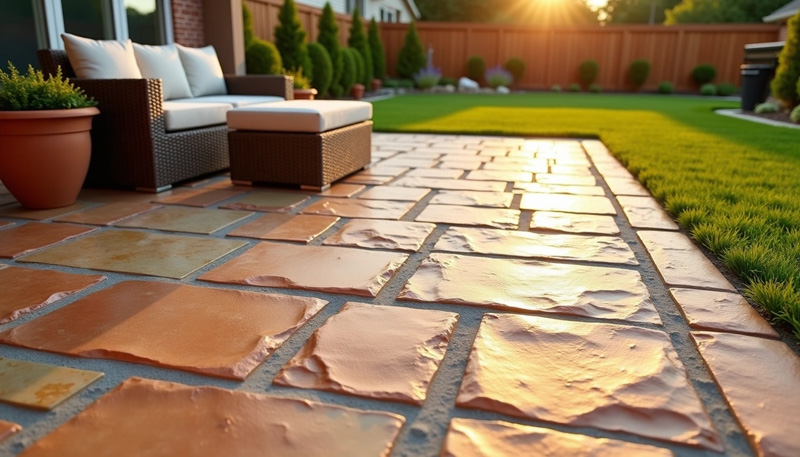
Geological mechanisms spanning thousands of years form these stones. Sedimentary rocks like sandstone and limestone develop as materials compact under pressure and bind together through minerals such as silica and calcite. Some sedimentary rocks metamorphose into metamorphic rocks, such as quartzite, when exposed to heat and additional pressure.
The transformation from quarry to finished product involves three distinct phases. Quarries in areas known for high-quality deposits extract large stone blocks, including Arizona, Pennsylvania, and Colorado. Using skilled workers or machinery, the stone is split along its natural layers, causing unique textures and patterns. The stone slabs are trimmed to your project’s specifications.
Common Stone Types Used for Patios
Sandstone delivers natural hues and a smooth texture, making it a preferred pick for warm-colored palettes. Sand particles settle and cement together through groundwater minerals, forming the stone.
Slate provides a fine-grained texture with deep, rich colors ranging from black and green to red. This metamorphic rock forms from shale or claystone under high temperature and pressure, creating obvious layered structures.
Limestone offers subtle refinement with consistent color ranging from gray to light brown. Calcium carbonate comprises it, and it splits easily along bedding planes.
Quartzite stands out because of its durability and sparkling mineral patterns. Travertine works well in warm climates and features soft, creamy hues.
Flagstone exhibits a broad range of colors, including dark browns, grays, golds, reds, and blues. A single slab often contains multiple colors.
Size and Thickness Options
Flagstone should be at least 1.5 inches thick for patio applications to assure maximum strength and stability. Thinner cuts work for patios resting on stable concrete bases. Thicker flagstone handles direct-on-grade installations with high foot traffic.
Patio flagstones are 12 inches long and 2 inches thick. Select flagstones measure 2 to 3 feet long and about 1 inch thick, better suited for wall caps and countertops. Sawn flagstone at 1.5″ thick offers approximately 85 square feet of coverage per ton. Split flagstone at 1-4″ thick provides 60-65 square feet per ton.
Why Choose a Flagstone Patio?
Natural stone patios provide clear benefits that make them worth considering for your outdoor space. These benefits help you decide whether flagstone aligns with your project goals.
Timeless Natural Appearance
Each flagstone piece carries unique color variations, veining, and texture that create a one-of-a-kind look. The irregular, organic shapes blend naturally with their surroundings, providing a rustic yet elegant charm. Colors range from soft earth tones to rich grays, browns, blues, and reds. This natural beauty creates a classic appearance that suits architectural styles of all types without ever feeling outdated. The stone ages beautifully and tends to look better over the years.
Long-Lasting Durability
Projects using flagstone can last 50 to 100 years under ideal conditions. This comes from the material’s natural composition and strength
The stone withstands heavy foot traffic, harsh weather, and temperature shifts without cracking or wearing. Its solid composition provides natural resistance to cracking or shifting. Properly installed flagstone can outlast many other paving options and provide decades of functionality.
Heat and Temperature Resistance
Flagstone remains comfortable even in the afternoon sun. Light-colored stones do not absorb heat, so they stay cooler to the touch. The temperature difference can be substantial—sometimes 15-20 degrees cooler than manufactured materials.
Parents appreciate this feature since kids often go barefoot around pools. Dogs benefit too, as flagstone surfaces protect their sensitive paw pads. The stone’s natural thermal properties help maintain comfortable temperatures year-round.
Easy Repair and Replacement
You can lift out the damaged piece and lay down a new one when stones break or crack. This easy process doesn’t require grout or mortar with dry-laid installations. Fixing uneven or loose stones greatly reduces trip hazards.
Cost and Installation Considerations
Budget planning requires understanding both material and labor expenses to complete your project. Installation costs for flagstone patios range from USD 15.00 to USD 30.00 per square foot nationwide. For a standard 300-square-foot patio, expect to spend between USD 4,500.00 and USD 9,000.00[122]. Materials alone cost USD 3.95 to USD 5.95 per square foot, while labor accounts for USD 1,000.00 to USD 4,000.00 of your total investment. *Note: Prices vary from area to area.
Installation Methods: Dry-Laid vs Mortared
Dry-laid installation costs between USD 1,515.00 and USD 5,200.00 and places stones directly on sand or gravel bases. This method is faster and simpler, but lasts about 10 years. Mortar-set installation costs USD 800.00 to USD 7,200.00 and provides heightened stability with a lifespan of up to 50 years[164]. Mortar-set costs USD 5.00 to USD 6.00 more per square foot than dry-laid. Concrete-set or wet-laid methods are the most expensive option, ranging from USD 1,535.00 to USD 7,935.00.
Professional Installation vs DIY Approach
DIY projects for a 144-square-foot patio cost USD 2,171.00 to USD 2,421.00 in materials and tools. Note that flagstone pieces have irregular shapes. This makes layout planning difficult until you have purchased the stones and they are delivered to the project site.
Factors That Affect Your Total Investment
Flagstone costs 15-25% more than pavers. On top of that, scheduling during off-peak seasons can yield potential savings.
Maintenance, Care, and Design Tips
Proper care extends the life of your outdoor space and maintains its appearance. Sweep the surface often to prevent dirt buildup. You can seal the stone with a matte finish each year to protect it from water and oil penetration spills. Choose cleaners formulated for natural stone to avoid etching or discoloration. Sealing your area with a matte-finish product once a year will help protect the stone from water and oils.
Cleaning and Regular Maintenance
After rainfall, use a squeegee to remove standing water and prevent mold growth and mineral buildup. For thorough cleaning, apply gentle soap with a firm-bristled brush. Skip high-pressure washers at maximum power, since they damage joint filler.
Preventing Weed Growth Between Stones
Polymeric sand forms a solid barrier that prevents weed seeds from germinating after water activation. Boiling water eliminates current weeds without using chemicals. Regularly sweep the area to clear seeds before they take root and sprout. Manual removal handles occasional growth.
Popular Flagstone Patio Ideas for Your Space
Random patterns create a natural, flowing appearance, while grid arrangements fit traditional settings. Tiered designs introduce dimension and separate different areas. Fire pit sections blend seamlessly with flagstone settings.
Flagstone vs Pavers: Making the Right Choice
Flagstone requires higher spending than pavers but offers genuine natural character. Pavers provide a consistent setup and reduced installation expenses. Flagstone delivers better traction and classic appeal. Your decision hinges on available funds and aesthetic preference.
Conclusion
Flagstone patios represent a smart choice for homeowners wanting natural charm and enduring quality. The higher initial expense provides generations of strength that factory-made options cannot replicate. Your yard receives permanent appeal from the distinctive color differences and surfaces nature creates. Whether selecting dry-laid methods for budget-friendly work or mortar-based for ultimate longevity, thoughtful preparation produces outcomes you’ll appreciate for years. Investigate nearby installers and evaluate material choices. Pick the flagstone variety that matches your weather conditions and aesthetic goals.
What is Flagstone | Blog Article | T-Squared Landscaping and Design, LLC | All Rights Reserved | Greenville, SC